
 Spotify
  Amazon Music
  Apple Podcasts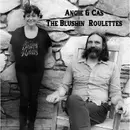
Send us a text Regarding Americana music singer-songwriters, do you enjoy discovering and being moved by stories that include love, eclectic music, tragic loss of friends, banjos and amputations? Who doesn't? Well, Angie Heimann and Cas Sochacki, share such stories in this interview as The Blushin' Roulettes. Oh, did I mention they saved their dog's life the morning of the interview? Angie and Cas, both beautiful humans, have been making Americana and Bluegrass music and traveling for...
Regarding Americana music singer-songwriters, do you enjoy discovering and being moved by stories that include love, eclectic music, tragic loss of friends, banjos and amputations? Who doesn't? Well, Angie Heimann and Cas Sochacki, share such stories in this interview as The Blushin' Roulettes. Oh, did I mention they saved their dog's life the morning of the interview?
Angie and Cas, both beautiful humans, have been making Americana and Bluegrass music and traveling for a while now, separately and together. In the process they have collaborated with other beautiful humans in creating and curating a collection of songs that entertain as well as offer healing.
Mentioned in our conversation were quite a few names of musical friends and collaborators. You can learn more about them with these links:
The Blushin' Roulettes
https://blushinroulettes.com/
Michael McNevin
https://michaelmcnevin.com/
Pacific Songwriting Camp
https://songcamps.org/
Jay Brown
https://jaybrownmusic.com/
Aditi Sethi
https://aditimusic.com/
The Ladles
https://www.theladles.com/
The Appalalucians
https://theappalucians.com/
The Lazybirds
https://lazybirds.net/
A Questionable Podcast Production of Peaches Patio Presents
Who's the puppy there?
SPEAKER_06This is beans.
SPEAKER_07Hey Bean. Oh, really?
SPEAKER_06Yes. Cass woke up to see her with a sock in her mouth, one of the kids' socks. And as soon as he said, Beans, what do you have? She scarfed it down and swallowed it. And then we had to induce, we had to give her hydrogen peroxide so that she would throw it up.
SPEAKER_07Throw it up, huh? That's exciting this morning.
SPEAKER_06Yes. All all before the kids went to school.
SPEAKER_01Talkin' about old Grant. He's been lots of places, and you see many faces. Now he sits around and it's understanding. Hey. He's not asking for your money. Just another way to waste your time. You might save your life with a piece of advice. Gramps just make shit up.
SPEAKER_07In this episode, we have a conversation with Angie Heinemann and Cass Sachaki. They're two members of the Americana and Bluegrass group, the Blush and Roulettes. I had the pleasure of meeting and hearing Angie for the first time a few years ago at the famous Mud Puddle shop in Niles, California. But it was Michael McNevin, the proprietor of the Mud Puddle, and also one of the talented musical forces behind the Pacific songwriting camp that enlisted Angie as an instructor at the January 2023 camp in Cabria, California. Angie was generous with her time and she shared some of her secrets to creating clever lyrics and engaging melodies with her guitar and banjo in hand. I know you're going to enjoy this North Carolina-based assemblage of talented and creative singers, songwriters, and musicians. So listen in, please, as we chat with Angie and Cass. Right out of the gate.
SPEAKER_06Well, that's a funny story, actually.
SPEAKER_07Well, here we go, ladies and gentlemen.
SPEAKER_06Here we go. Um Cass's mom actually just sent him uh an old batch of photos for his birthday. And they were just the actual photograph developed. The old old school photos. And a lot of them were from this very parade that was the reason that we met. There was a we lived in Mendocino, California, and we had similar mutual friends that I lived with that were in the circus. And I actually had a few, they they always tried to rope everyone in. And I had a couple times where I did things like somersaults in a show, and they called me a tumbleweed.
SPEAKER_00And the circus shows were always like these theatrical performances. There was like a whole theme, a whole story that was told with the circus with acts interspersed. It still is actually. It's called Flyn Creek Circus. But this is back in the early 2000s. They all lived at this property out in Comchi, California, on Flint Creek Road. They were potters and aerialists, and a bunch of people were living out at this place making pots and doing forming the circus at the time. And my family has a ranch in Mendocino just east of the village, way back out in the red woods. And I had been friends with the pottery side of Flynn Creek since I moved to Mendocino and in 2000, 2001.
SPEAKER_06And I was in a jug band with one of the aerialists who lived out there.
SPEAKER_00There's this wonderful Fourth of July tradition in Mendocino in the village. There's a great parade, it's always very like politically charged, wacky, all kinds of fun floats that come through, and it's a huge deal. People come from all over the county to go to the parade. So Flyn Creek Circus and Old Mill Farm decided to team up one year for a float in the circus.
SPEAKER_06And that's how we met. We were dressing pigs up in costumes and riding on the back of a float together.
SPEAKER_07Well, that's a how we met story that I have never ever heard before. It was a circus.
SPEAKER_06It was a circus, yeah.
SPEAKER_07Cass, are you from the California originally?
SPEAKER_00I was born in Mendocino, and but I was raised in Kentucky. Always had family roots in Mendocino growing up. I studied forestry in college and had plans to come and work at my family's ranch, managing the forest out there. It was owned by my mom's first husband, Chuck Hinch. They had bought it together.
SPEAKER_06So Cass's brother's father.
SPEAKER_00Right. My mom and Chuck had bought the ranch in 1973 on their migration northward from Hayed Ashbury and Mill Valley and Cordamadeira and all that. I planned to come and work for Chuck managing the forest, but he died in a tractor accident in 2000 on the farm. And my brother ended up inheriting the farm. And Cass was thrown into running it with his mom and with my mom and my biological dad. So we all came together and set out on this mission to get the farm in shape and revitalize it after 25 plus years. And so yeah, that's how I ended up back out there.
SPEAKER_06And actually, Old Mill Farm is going to be celebrating its 50th anniversary this summer.
SPEAKER_00Yeah, you get a kick out of the farm. It's really neat. It's it has a really long history. It was settled in the late 1800s by two Finnish immigrants, and they got two plots of land through the Homestead Act and brought their families over brought their didn't they meet two sisters? Yeah, they brought two sisters over, married two sisters, and then one of the families settled there long term, but they, you know, did amazing things. They raised cattle deep in the woods and they logged the ridgetop of all these old growth redwoods and kept it pastured and it's off the grid. It's all solar powered and its own water system. It's a really neat spot. It's beautiful.
SPEAKER_06Not as much a working farm these days. It's just so hard to make the farmers' markets work and everything. It's just a now it's like a a giant plot of land maintained by the family.
SPEAKER_07But Angie, you're not from Mendocino originally, though, are you?
SPEAKER_06No, I'm not. I'm from Ohio originally, from Kent, Ohio.
SPEAKER_07So how did you get Mendocino? It's a long ways away from Kent, Ohio.
SPEAKER_06It is a long way away. Yes. I was at the time with a fellow who was um a woodworker, and he got into the woodworking program, the College of the Redwoods woodworking program, a really great wood school. And so we ended up moving out there for what we thought was a year, and then he got in for a second year. So we stayed for the second year, and I just did not want to leave at the end of that time. So I stayed. I understand. It's just, I mean, it's so beautiful out there, and it's just such a it was my kind of coming into my adult life after college, but just really feeling like it was a place that drew me in. So I stayed.
SPEAKER_07What did you study in college?
SPEAKER_06I studied interdisciplinary studies, a mixture of women's studies and creative writing.
SPEAKER_07Well, that seems to feed into your music.
SPEAKER_06Definitely. That's what I like to think. That it that all those bucks went somewhere.
SPEAKER_07So you met at a circus.
SPEAKER_06We met at a circus, yes.
SPEAKER_07And when did you discover that you were both singer, songwriter, musician types?
SPEAKER_06Well, I had been in the jug band that I was talking about with a bunch of fellas, and then I started the blushing roulette with a handful of other women, and then we soon whittled down to a duo, and then we started letting the fellas in.
SPEAKER_07How nice of you.
SPEAKER_06Yeah, that's a the fast version of the story.
SPEAKER_00Yeah, and for me, like at that time, I guess I was probably trying to woo Angie. We weren't necessarily a solid item yet.
SPEAKER_05Right. Took a while for us to use your words carefully.
SPEAKER_00I hadn't been playing much music for a period of about eight years or so. I studied piano as a child and then played guitar and bass through high school and college, I didn't do much music other than just really sporadic jamming with friends. And when I got back to Mendocino, I was so busy with farm stuff that it was, again, real sporadic jamming with friends. But when I realized I wanted to start hanging out with Angie and spending time with her and our other sort of musical comrades, the kerosene condors, I just picked up the guitar again and started to get back into it. And shortly after that, I had a really bad accident at the farm with a table saw while building a straw bell building. And I cut my left hand with the table saw really badly. All through my palm, I cut the index finger off and did tendon and nerve damage to pretty much every other finger, but mainly pinky and thumb. And that was about the time that Angie, well, she started basically taking care of me. I needed quite a bit of help at that time. And we, I think that's when we first moved in together and had this whole reflection like, what do I this was a life eye-opening, life-changing injury. They managed to reattach my index finger, which was amazing. It's shorter. And a friend, and so yeah, a friend, another artist musician on the coast, Tommy Brown. While I was recovering and healing, he brought over a lap steel guitar for me to play with, which previously I'd just been playing guitar, regular guitar and and some bass. So knowing that I could hold the bar, it didn't take as much dexterity with your left hand as far as forming chords because you're using a bar for everything. And I just it resonated with me more than guitar ever had.
SPEAKER_06No pun intended, right?
SPEAKER_00And I resonator, yeah, right. And I picked up my first uh resonator, my first Dobro, and just started studying that in between surgeries. Then at the same time, I started learning how to record because as Angie is a prolific songwriter, I enrolled in a couple of online courses through Berkeley College of Music and music production and mixing and mastering, and set off in that whole world, which is an expansive world of never-ending learning. And we started working on recording Angie's songs slowly. We put together a studio out at the farm, called it Farmstead Studio.
SPEAKER_06And we still call our studio Farmstead Studio, even though we're in North Carolina and not on farm now.
SPEAKER_02Yeah.
SPEAKER_06Name came with us. And then we then the band was mostly then Kate, who was the other woman who had been she'd been playing cello for a long time and singing harmony. She had a babe and moved away. And so then it was just me and three fellas for a while. And then after shortly after we moved here to North Carolina, which was shortly after we had our first, we lost our other two band members. They both passed away. Buddy had a stroke. He was a really fantastic guitar player that was a gem of Othella, and Jubil, who was our age and just one of our best friends, he died in a car accident. So we went on hiatus for a while from playing, partly because we were in the new baby land, but also just because we were quite sad. And then we met Jay Brown and his wife Adidi Sethy, who we are now in another band with called the Appalotions, and that sort of brought us out of our hibernation. And then we started playing more as the roulettes again as well. And Jay also plays with us as the blushing roulettes. So that's the nutshell version.
SPEAKER_07It's a very incestuous uh type of industry, isn't it?
SPEAKER_06It really is, yes.
SPEAKER_07Not to be salacious about the description that's like that sounds about right. Yeah, I love the uh the recovery story and what a horrific experience that must have been, Cass, for you to go through. You were inspirational four years ago when I met Michael. That I went to the camp and I went, I really wanted to learn how to do this. And uh of course, my excuse is um for my marginal playing efforts is I'm old, I have arthritis, I got fat short fingers, blah, blah, blah. And then I listen to your story and I'm going, shut up, just practice. So thank you for that bit of inspiration. I appreciate it. And the recovery experience, I would imagine that the nature of that kind of surgery and or surgeries, I would imagine, and physical therapy and all of that. Is that something that lingers in in terms of your recovery? Is it still going on? I I guess my better question was how long ago was that?
SPEAKER_00It's been it was in 2006, been a while, and I went through about two, two and a half years of surgeries. I think it totaled six. It's plateaued at some point, probably in the early 2010s.
SPEAKER_06I would say now he's recovering from knee surgery as we speak onto a different limb now.
SPEAKER_07You're too young to be having all these experiences with he's been hard on his body, though.
SPEAKER_06He's really a physical worker guy, so yeah, yeah, or he has been a lot.
SPEAKER_00But the hand, it's it has limitations. I can't straighten my that's the range of motion on my pinky. I don't know if you can see that.
SPEAKER_07I can see it very well, yeah.
SPEAKER_00Very much, it doesn't get any straighter. The index finger, aside from being short, ended up turning out okay. And I don't really that's just one of those things, I don't really notice it anymore. I don't think it prohibits my ability to play a slide guitar much, other than some slight muting, but I've just found ways of working around it. I just started playing upright bass about 18 months ago, and that is more a little more challenging. The reach of my hands is is decreased.
SPEAKER_06So now it's just our job to keep either one of our kids from cutting off their fingers because it's a Sochalky family tradition. Cass's dad and several of his uncles and his grandfather have all cut off fingers.
SPEAKER_00So long line of Polish carpenter amputees. There's a great man named for you, the Polish carpenter amputees.
SPEAKER_06Yes. Now we have to just we have to we've we've already started telling our kids. Be careful when our daughter's just getting into cooking and don't hold the knife that way.
SPEAKER_07Get them some chain mail gloves that are recutters' gloves.
unknownExactly.
SPEAKER_07Well, that's a legacy you definitely don't want to pass on, right?
SPEAKER_06That's right.
SPEAKER_07That is an amazing story of recovery. Are your children musicians as well?
SPEAKER_06They are. We try not to push too hard. I'm a music teacher, and so it's quite difficult for me to not crack the whip too much, but it feels really important not to force them into it because they then they'll just resist. But we do things like they just had a week home from school, and so I set up a little checklist that before they ask about any screens, they have to do these things. And one of those things is just 15 minutes of music, and they did it every day of break, and then they would our daughter got into it, they'll float in and out of it, but she would do it longer than the 15 minutes, and so they like it. I think they feel some ownership of it, but I want to make sure to allow it to be theirs and to not make it be my thing that I'm pushing onto them or our thing that we're pushing onto them.
SPEAKER_07I think it's jamming a family thing at times, at times, yes.
SPEAKER_06We were jamming on Axl F a couple weeks ago because our son wanted to learn it about little Dean. He was really into learning that, so I taught him on the piano and then Cass got on the bass. And so yeah, we'll occasionally break into spontaneous family jams.
SPEAKER_07What a wonderful home you have.
SPEAKER_06It's fun, yes.
SPEAKER_07So when did you start writing music, Angie? It it's like Cass said, you're prolific, and I would imagine that the muse came early in your life.
SPEAKER_06It's true. I think I must have been about I mean, I remember writing songs when I was in grade school, and I think the first song I ever wrote was called Leather Lips. And it was before I was like ever old enough to be kissing anyone, but I just imagined if you kissed someone too much, your lips would turn leathery. And so I wrote a song about that, but I don't remember it at all. But that was the first one. But yes, so it's been a long time, and then I think when I was maybe about 12, I started playing guitar. My dad taught me puff the magic dragon, and then it was all over because I was then putting chords to songs and things like that, and then I just haven't stopped ever since.
SPEAKER_07Is uh leather lips available on Spotify?
SPEAKER_06No, and I don't even remember how it goes. I just remember that uh that it was a thing. I'll have to rewrite it sometime.
SPEAKER_07Oh, there you go. Yeah, that'd be fun. And so at 12 years old, you started playing guitar, and uh, but how did you go to the dark side of the banjo?
SPEAKER_06Well, poor Cass was on me at the beginning of that journey and has been with me ever since. But we were on a tour with Buddy and Jubil, who were two of our bandmates, the two that passed away maybe a year or two before Cass and I moved to North Carolina. So that must have been 2011. 2011. And we were traveling all around playing shows, and lo and behold, I came across uh an affordable banjo. And I didn't know at the time that an affordable banjo means a banjo that slides out of tune even more than an expensive banjo, but I had it for a while, and the one of the first memories I have, we were in New Orleans, and I was sitting on the porch of this really cool old house we were staying in with a friend of a friend playing the banjo, and there was a bird, and it must have been it might have been a mocking bird, but it was I was singing and playing the banjo, and it kept answering me and singing. And so I figured if a bird could handle it, then maybe I should keep playing.
SPEAKER_07That had to be a magical moment.
SPEAKER_06It was very magical, yes.
SPEAKER_00That city is incredible.
SPEAKER_07Is that your go-to instrument now when you're performing?
SPEAKER_06No, I still mostly play the guitar. I know you may think that it was my go-to because I believe I played it every performance at the song camp. I was playing banjo. But no, that is not my go-to. The guitar is still my main instrument, but the banjo, I think because it's newer to me, it feels a little more freeing and and I really love the sound of it, in spite of all the banjo jokes I have made. And I don't really play I play with a thumb pick when I play the guitar. So I think once or twice I've tried that with the banjo, but I just like to get the drone string with my thumb.
SPEAKER_00She plays her own style of banjo. We call it banji. Banji.
unknownYeah.
SPEAKER_06One day I'll live up to the name.
SPEAKER_07Oh, you play beautifully. Well, I was listening to a couple of your live at Farmstead album this morning to the one song, the Smoke and Ashes. Of course, being a former fire guy. If it says ashes or smoke, I'm gonna listen to it. So tell me a little bit about that one.
SPEAKER_06Well, that one is a Jay Brown original original, and I believe that he wrote it for the Appalachians when we started playing together to sing as a twangy duet. And so, yeah, that's about all I know about it. But we made him bring it out again for that album.
SPEAKER_07Well, thank you, Jay Brown.
SPEAKER_03I've been smoking ashes, been a drinking down the drift, and I'm down to my last pocket, full of chain, and then we're gonna go.
SPEAKER_00Didn't we put that on the Appolutions album?
SPEAKER_06I believe it is on the Appolutions album, but it isn't that funny. That was so long ago. We've been working on a new Applutions album in the studio. Yeah, it's on there. But it's quite different, I think.
SPEAKER_07So is the music for the uh blushing roulettes and the Appolutions different in some way? They're the the way that their music is uh crafted?
SPEAKER_06Yeah, I'd say for the Appolutions, Jay and I share the sort of songwriting role role. We both bring a lot of songs to the table, and we do a lot of three-part harmonies with Jay's wife, Adidi. And sometimes she plays harp. And I'd say that it's a little more, does it feel a little softer or something than the blush? And the blushing roulettes aren't hard by any means, but I think just by virtue of the fact that it's really two songwriters bringing our songs to the table for the Apolutions, it makes it different.
SPEAKER_00I don't know if I would say it's a little more spiritual.
SPEAKER_06Yeah, I think we pretend to put some more spirit songs in the yeah. If I were to write a spirit song, it would go to the appluutions more than we don't say religious because they're not religious, but they're spirit-centered. Addie, Sapphi Brown, is a death doula, and she's also at the forefront of rethinking the way that we die in this country. And she's started a center with a whole group called CCLD, the Center for Conscious Living and Dying. And she's just been really wrapped up in that for the past couple of years. But Jay also spent a lot of time as a hospice musician, music therapist. Music therapist. And for some reason, I have also written a lot of sort of death songs or songs, um, sort of spirit songs. And so I think that connection that we all had shows up in our music a lot.
SPEAKER_00So I feel like and that we we both had this shared experience of losing very suddenly band members around the same time that we lost Jubilee Buddy. Jane Adity lost another dear bandmate friend of theirs. Suddenly, they had a band called Shantavani, which is more of an Indian themed band.
SPEAKER_06Sort of fusion, but still yeah.
SPEAKER_00Aditye is Indian, so she brings that flavor.
SPEAKER_06Well, she's from the United States, but yeah, she's been so wrapped up with that that we haven't done much as the Appolutions, although we have been working on the next Appolutions album, which I think is going to be quite nice in the studio for about the last two years.
SPEAKER_00Yeah, and we have released some singles from that.
SPEAKER_06And I'd say the roulettes have a little more of a body side, even though it's not always like that. I mean, we definitely have a sweet side too, but yeah, the roulettes are a little more prone to have a shot of whiskey during a full band show or something.
SPEAKER_07Well, I'd be happy to buy you one next time you're around in that situation. So the engineering studio work. Do you have a studio in your home or do you record someplace else?
SPEAKER_00Yeah, we're in half of it right now. Oh wow, okay. Yeah. Right. Same we had uh a dedicated studio space pre-pandemic, and during lockdown, it just became with the two young children during lockdown, it was pretty much impossible to use.
SPEAKER_06So we just unless we brought them with us to the studio, but that meant bringing toys, and so we brought the studio to us.
SPEAKER_00Yeah, we just moved it and into our home and we live amongst mic stands and cables and cords and instruments everywhere. And it's just it's actually been awesome. We've worked more since doing that in the studio than we ever have before.
SPEAKER_06So yeah, because we can just work on a mix, or do I can say something like I'm notorious for saying just one little, let's just do one little thing. All I really want to do is get the vocal to the song, or can we just do this? Um but that's a lot easier to do now that it's right here in our house.
SPEAKER_07I would imagine, yeah. The spontaneity would actually reap some benefits there, right?
SPEAKER_06Definitely, yeah.
SPEAKER_07And of course, having an engineer in the family engine that makes a big difference, right?
SPEAKER_06It makes a huge difference, yes. I I'm not sure if Cass is glad or if he regrets that he ever walked with that. I work him pretty hard.
SPEAKER_00No, I really enjoy it.
SPEAKER_06It's the way that my mind is wired, and it is so not the way that my mind is wired. So it is it's really it's perfect.
SPEAKER_07It's perfect.
SPEAKER_00Yeah. Now, two weeks ago when Angie said, So our portion of our house is completely torn apart, gutted walls, ceiling, electrical hanging everywhere. And Angie says, Hey, I really want to record this song, Everything You Ever Needed Woman, for a taxi submission. Let's do it today. And I'm like, Are you serious? Let me look at our house. You want me to just take a day off from yeah, some things take precedence, right? They do, and I often in the moment I'm like, no, or you're like, why? We don't have the time to do this right now. But you know, when I sit back and reflect on it, I'm like, well, you know what?
SPEAKER_06When else are we gonna do it?
SPEAKER_00When else are we gonna do it? And it is just important to do it and to have it done. And if you don't do it, then you won't do it. So I'm trying to be more minded like that.
SPEAKER_06What before I came to California on the trip where I met you, and before I came to the song camp, I had a number of recordings, and some of these were Appolutions recordings um that we've been working on for the past few years. But I have I really wanted to come with something new that was just under my solo name because that was how I was going to be traveling. And so the Winter Garden album that I think you might have one of Thanks to you. Yes, that was all a that was a hey Cass, can we just gather some of the Appolutions songs and simplify some of the mixes and take these other recordings that I've been working on and put them together just as a representation of the songs that I'll be doing when I go to California? And he said, This is never as simple as you think it's going to be. And lo and behold, I mean, it took a while, but I really feel happy with it. And so thanks for letting me do it.
SPEAKER_07Guess it's your own fault. You make it look easy. Everybody thinks that it's real easy for you, but nobody knows what's going on behind the scenes, right?
SPEAKER_00Fortunately, I do work with very appreciative musicians and writers, including Jay and Angie, who are basically who I mostly work with. I have one other client right now who's a another hospice music therapist who's recording a solo album.
SPEAKER_06But I don't let them do too much other work because on the uh this week I have too many songs that need to all for herself.
SPEAKER_00Yeah, she's selfish. This weekend, um I have a weekend long session with uh Jay and I play in another yet another band together called Lazy Birds that Jay has had with the drummer and our friend James Brown, Jay Brown and James Brown. They've had this band for I think it's going on 24, 25 years, and I've joined up with them a little over well, almost two years ago to play upright.
SPEAKER_05And we are yeah, just getting started on a they're kicking he's he's kicking me and the kids out for the whole weekend.
SPEAKER_00We get a bunch of rowdy, rowdy lazy birds in here to record all weekend. I'm looking forward to that. But that's that's a great band. It's some originals, but mostly covers from early country, early blues, American roots music, some early jazz stuff, really fun stuff. And Jay is a great singer and an amazing guitar player. The whole band is great, so that's gonna be a fun project.
SPEAKER_06You're gonna be wearing two hats that time because playing in engineering, right? Yeah, yeah, but you're good at that.
SPEAKER_00I've been getting better at that.
SPEAKER_06It's a little stressful, but that's what you did with Live at Farmstead.
SPEAKER_00That's how we did Live at Farmstead, and it turned out just fine.
SPEAKER_07Oh, yeah, I love that album. The pieces that I've listened to, so nicely done.
SPEAKER_06Thank you for your support too. We just we saw that you just bought it on the it's my honor.
SPEAKER_07So uh now that the pandemic has lightened up a little bit, I would imagine traveling is a little easier in spite of having the responsibilities of parenthood, both ongoing and everlasting. Do you travel much out of the Asheville area or is the Asheville area your primary live performance location?
SPEAKER_06Well, Asheville is our primary live performance location in Black Mountain, too, which is our little town. But we go to California once or twice a year, and that's still our stomp and grounds, and we still have a nice fan base in Mendocino as the Blush and Roulette. So since the pandemic, we've gone maybe three times, three or four times since 2020. No, two times.
SPEAKER_02Yeah.
SPEAKER_06And then we'll come back this summer. So that's like that's the biggest fan base that we have is in Mendocino. So we keep going back there, and we basically go to all the places where we have family that can babysit. So we have a little mini tour in Knoxville coming up because my dad lives in Knoxville, and then we play up in Ohio where my mom lives often. So we center our non-southeast journeys around family help.
SPEAKER_07Child care. Yeah. Yeah. It's hey, it's important, and it's wonderful that it's immediate family, right? To go see grandpa, grandma, and hang out with them and learn all the bad habits of the world. Right.
SPEAKER_05That's right.
SPEAKER_00And have their special time alone without the pesky parents.
SPEAKER_06Feed them all the sugar they want. That's right.
SPEAKER_07Hey, but when you play in Mendocino, where is there one particular place that you play or these days when we go back, we play at the Casper Community Center.
SPEAKER_06Casper's a little tiny town, I don't know if right in between Mendocino and Fort Bragg. And that actually has a lot of neat history. If when you're on your journey, if you want to go and I think the Casper Headlands are a little bit overgrown now, and mountain lions are on the headlands, which is common for that area. But it used to be the site of the Casper lumber mill. And there used to be tons of housing on the Casper Headlands for the folks that worked at the lumber mill. And the old studio where we used to record before Cass started learning was this beautiful building that used to be the company store for the Casper lumber mill. And so I used to live in Casper and I was right across the street from the Casper Inn, which is now not in operation, but for a long time it was a really happening nightclub that a lot of musicians traveling from Portland to San Francisco, it would be the midpoint. And so we would get all these great act like way in the middle of nowhere. And I would just get to go play. We had so many nights of dancing to great music at the Casparan and then stumbling back to my apartment right across the street.
SPEAKER_00And so yeah, those were the days. The Casparan was has definitely got a lot of great history.
SPEAKER_06Yeah, but someone bought it and they might be starting music there again at some point. Now we play at the Casper Community Center just because it's a really lovely spot too. And then we do other games when we were there.
SPEAKER_00There's a great dive bar in Mendocino called Dick's Place.
SPEAKER_06Yeah, if you go there, you there's a what do you it's like a little miniature Dick's bar.
SPEAKER_00There's a built uh diorama kind of thing. Diorama thing, yeah. And it's like a table with a clear complexiglass top, but uh inside one of the one of the characters sitting at the bar, or two of them actually, are buddy Stubbs and one of them smoking a cigarette outside, leaning against the bar.
SPEAKER_06I can't remember which one, but our big two band members that have passed are in the little replica.
SPEAKER_07So nice memorial for them, huh?
SPEAKER_06Definitely, yeah.
SPEAKER_07Well, I'm definitely sorry for your loss. It sounds like one of the gentlemen in particular was way too soon, right? Um Yeah.
SPEAKER_06Um I think they were both way too soon, but yes, definitely Jubilee was our age, so that was really soon. That's young. Here's another fun thing. There's a harvest at Mendoza's grocery store right on the main drag of Mendocino, and right across the street from that is a tiny little building that is probably how big, seven by seven or something. Yeah, it's very really small. And if you look in the windows now, it's some kind of I think they do tours, I don't know if they do cannabis tours or something like that. But I used to teach, I had a piano. Somehow we fit a piano in there, and I used to teach music lessons in there for a number of years.
SPEAKER_07So it sounds even smaller than the mud puddle.
SPEAKER_06It is even smaller.
SPEAKER_07It's definitely smaller than the mud puddle.
SPEAKER_06Yeah, I did not used to host um jams in there, really, except for a few late night just friend jams.
SPEAKER_07But Asheville, how did you end up in Asheville?
SPEAKER_06Well, the same tour when I got the banjo, we were scouting out places in the southeast that we might like to live. And Cass had gone to camp in here in Black Mountain at a camp called Camp Rockmont.
SPEAKER_00Growing up as a boy and young man. So for like 10 years, my parents would drive me down here from Kentucky and we got to know the area.
SPEAKER_06And I really fell in love with Black Mountain in particular when we came through.
SPEAKER_00I went to college in Tennessee and had a lot of college friends about the Southeast, and two very close friends were in Asheville and had been for a little while. We looked at places like Chattanooga and Athens, Georgia, where Angie picked up her banjo and Charleston and Nashville. But Asheville just felt more well, it's a it's not a huge city, and we are small town people.
SPEAKER_06It feels like a huge city, actually. When we go into Asheville, it feels big.
SPEAKER_00Well, and it's changed a lot in the 10 years that we've been here, but we spent a year in Asheville. Black Mountain's only 20, 25 minutes east of Asheville. We spent a year in Asheville and then decided we were going to stay in the area, and we ended up finding our home here in Black Mountain at a very fortuitous time before real estate went absolutely bonkers around here. And uh we were just we we love it here. It Black Mountain's a wonderful small town. Uh it's a great place to raise kids, and we have the city of Asheville at our fingertips for things that we need. But other than like as much as we playing a gig downtown, we're going to try out to Trader Joe's, which or taking our kids to school.
SPEAKER_06They actually go they go to this really cool school that's in Asheville. We do drive there frequently.
SPEAKER_00But yeah, the area, the greater Asheville area is just there's a reason why it's become so popular for people to move here from all over. It's beautiful, there's tons of outdoor activity. The weather's nice, there's not a danger of wildfire or earthquakes.
SPEAKER_07It does seem like a safer geographical uh place in the country, notwithstanding the occasional weather that I we receive there. But it's pretty mild relatively.
SPEAKER_00Black Mountain does have an interesting history. In the 50s, there was a college here called Black Mountain College, and it was a hub for a lot of really cutting edge writers and artists and musicians. John Cage, Merce Cunningham, Ruth Osawa, Rauschenberg were all professors at Black Mountain College, and it dissolved. I don't know how long it was around exactly, but through financial administration's woes, it dissolved and then it became a summer camp, which is where I grew up going to summer camp at Camp Rockmont. It's now also the home and has been for the last 20-something years of Leaf Music and Arts Festival, which is called Lake Eden. There's a lake there called Lake Eden Arts and Music Festival, and that's a really cool regional festival that happens twice a year. And Leaf is a nonprofit organization that does outreach to indigenous communities to help preserve indigenous art and music all around the world. So that's a really special thing that that is unique to Black Mountain.
SPEAKER_07Well, you've wasted pretty much an hour with me this morning. Thank you so much for your time.
SPEAKER_04But on his gloves.
SPEAKER_07I hope you enjoyed listening to the stories that Angie and Cass had to share with us. I suspect they didn't make anything up, unlike me. Here's a question. How many bands that Angie andor Cass were or are currently involved in? Can you remember being named in this episode? Let's review. The Blush and Roulettes, of course, and that's why this whole discussion got started. Then we heard about Angie's jug band, I'm not sure if that was the name. Then there's Cass's kerosene condors, I love that moderation. Then we were introduced to the Appolutions, and let's not forget the Lazy Birds! We can agree on this, I think. Angie and Cass are beautiful humans. And the humans that they surround themselves with are nothing short of amazing. I'm thinking of their Apollution bandmates specifically, Jay Brown and Adidi Sethy. I invite you to make time to visit their websites and their music. The URLs can be found in the notes of this podcast. What does a URL stand for anyway? Well, that cool intro jingle that you heard at the beginning of this episode, plus this outro music was written, recorded, produced by the ladles. Write that down, L-A-D-L-E-S. I met Lucia, who plays fiddle, Katie on the guitar, and Caroline on the banjo at the mud puddle. It's a local music venue here in Niles, California. Their harmonies were just mesmerizing, and I had to ask if they might consider doing a jingle for me. And here's what they said.
SPEAKER_01You gotta be kidding me?
SPEAKER_07I have to go now. It's time for my nap.